Caring And Support Resources
https://www.larimer.gov/community-resources
- A Guide for Navigating Crisis: Remaining Functional in the Acute Phase
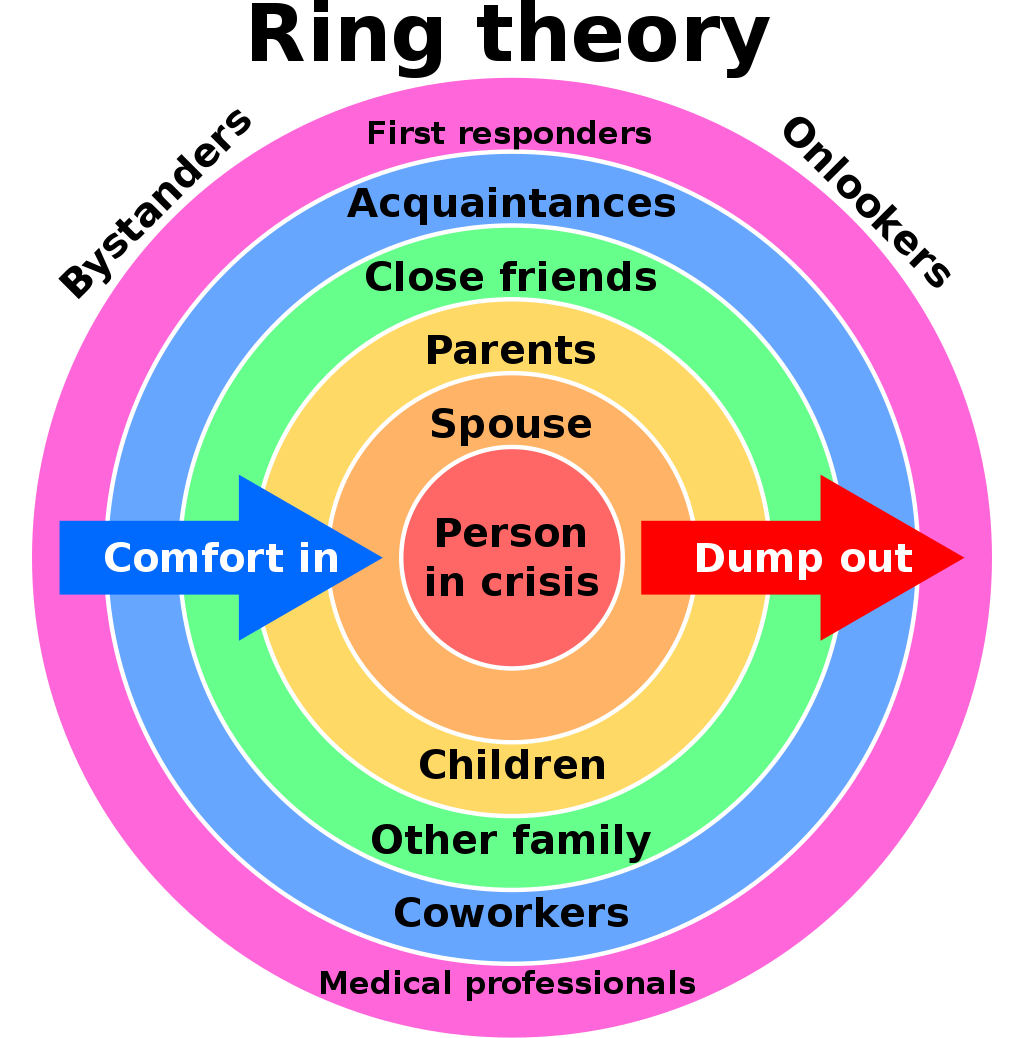
- Ring Theory: AKA Comfort In, Dump Out.
- Resources for Suicide and Crisis Moments
A Guide for Navigating Crisis: Remaining Functional in the Acute Phase
1. Acknowledge You're In Crisis Mode
Your brain reacts to crisis by switching to survival mode. This might manifest as foggy thinking, forgetfulness, or disorientation.
- Grounding and soothing your body
- Trying to be gentle with yourself.
- Supporting those who depend on you (e.g., children).
- Identify where you and other people are in the 'Rings of Care' and be present for the person at the center of the crisis.
2. Managing Time in Crisis
- You often have more time than you think. Breath, slow down, and don't rush into decisions.
- Prioritize tasks. Not everything needs to be handled right away. Identify what's truly urgent and what can wait.
- Outsource To A Second Brain: If you are struggling to figure out what's important, that's normal. Bring in a trusted people to help you navigate. They might help you make a list of what's important.
- It's okay to ask for time. Whether from medical professionals, legal advisors, or others involved in the crisis, it's generally acceptable to request time to think, consult, or simply process information.
3. Self-Care is Key
- Have I eaten recently? Food is important. Doesn't have to be "healthy". Calories > No Calories.
- Have I drank water recently? Hydration affects all of our bodies systems, drink up.
- Have I taken all my prescribed medications? Following prescribed medication schedules helps keep yourself in balance.
- Have I slept? Sleep is vital – try to rest when you can, even if it’s not your usual sleep schedule.
- Do I have the desire to try a new risky activity? This is not the time to get up on a ladder, or take up water skiing.
- Have you bathed or changed clothed recently?
- Have you moved your body in some way recently / have you felt the sun on your skin?
Often when a person is in crisis they won't keep track of these basics. Three strategies to support:
1. Ask "Rev. Sean's Dumb Questions": Ask the above questions saying, these are what Rev. Sean calls his dumb questions, they seem basic but in moments of crisis they can be helpful to identity gaps.
2. Don't ask, provide. Don't ask if you can bring over food, just do (don't get attached if they don't eat it). Don't ask, can I get you some water, ask: "Do you want some water or some juice?".
3. Make a list/ schedule. Help distill what needs to happen in the immediate term (which includes self-care) into a checklist or schedule.
4. Caring for Kids & Other Dependents
- Be honest, but sensitive. Adjust your explanation to match their age and emotional maturity.
- It's okay to let them see your emotions. Showing vulnerability helps them understand it's normal to feel sad or worried.
- Discuss coping strategies for when you're all feeling low. This can involve family activities, individual hobbies, or seeking support from outside sources.
- Don't hesitate to ask for help with childcare. This could be from trusted friends, family, or your community. Rides to and from activities, playdates, or simply giving you some time alone can be invaluable during this time. It not only helps you but also ensures your dependents continue to have positive experiences and stability during this difficult period.
5. Reach Out for Support
- Try to contact at least two people, preferably one who isn't closely connected to the person in crisis who can be your personal support person.
- Share your situation with your spiritual community. If you are part of a church, synagogue, mosque, or other religious institution, they want to know if you are in crisis. It's not a burden to them; being present and providing resources during times of difficulty is a fundamental part of their role. They can offer a range of assistance, from counseling to community support and prayer groups.
- It's okay to seek professional help. Therapists, support groups, and hotlines can provide valuable resources during a crisis.
6. Guiding Mindsets/ Mantras
- This crisis won't last forever.
- As bad as it is right now, it won't always be like this.
- You don't have to do it alone.
Ring Theory: AKA Comfort In, Dump Out.
The person in the center ring can say anything she wants to anyone, anywhere. She can kvetch and complain and whine and moan and curse the heavens and say, "Life is unfair," and, "Why me?" That's the one payoff for being in the center ring. Everyone else can say those things too, but only to people in larger rings.
When you are talking to a person in a ring smaller than yours, someone closer to the center of the crisis, the goal is to help. Listening is often more helpful than talking. But if you're going to open your mouth, first ask yourself if what you are about to say is likely to provide comfort and support. If it isn't, don't say it. Don't, for example, give advice. People who are suffering from trauma don't need advice. They need comfort and support. So say, "I'm sorry," or, "This must really be hard for you," or, "Can I bring you a pot roast?" Don't say, "You should hear what happened to me," or, "Here's what I would do if I were you." And don't say, "This is really bringing me down."
If you want to scream or cry or complain, if you want to tell someone how shocked you are or how icky you feel, or whine about how it reminds you of all the terrible things that have happened to you lately, that's fine. It's a perfectly normal response. Just do it to someone in a bigger ring.
"Comfort in, dump out.”